Contents
- ·The short version
- 1What is the difference between everyday anxiety and a disorder?
- 2How do you deal with anxiety naturally? With daily habits, not supplements.
- 3What are the best social anxiety tips for adults mid-conversation? Pause and say so.
- 4Should you face a situation anxiety wants you to avoid? Yes, in small steps.
- 5When must you get professional help? When anxiety causes problems in daily life.
- ·Questions you might have
- ·When not to
- ·Your move this week
Everyday anxiety is a normal alarm that fades once the stress passes. Here is how to deal with anxiety day to day: sleep enough, move regularly, cut back on caffeine, talk to someone you trust, and face avoided situations in small steps. If worry runs most days for six months or more, or disrupts work or relationships, see a clinician.
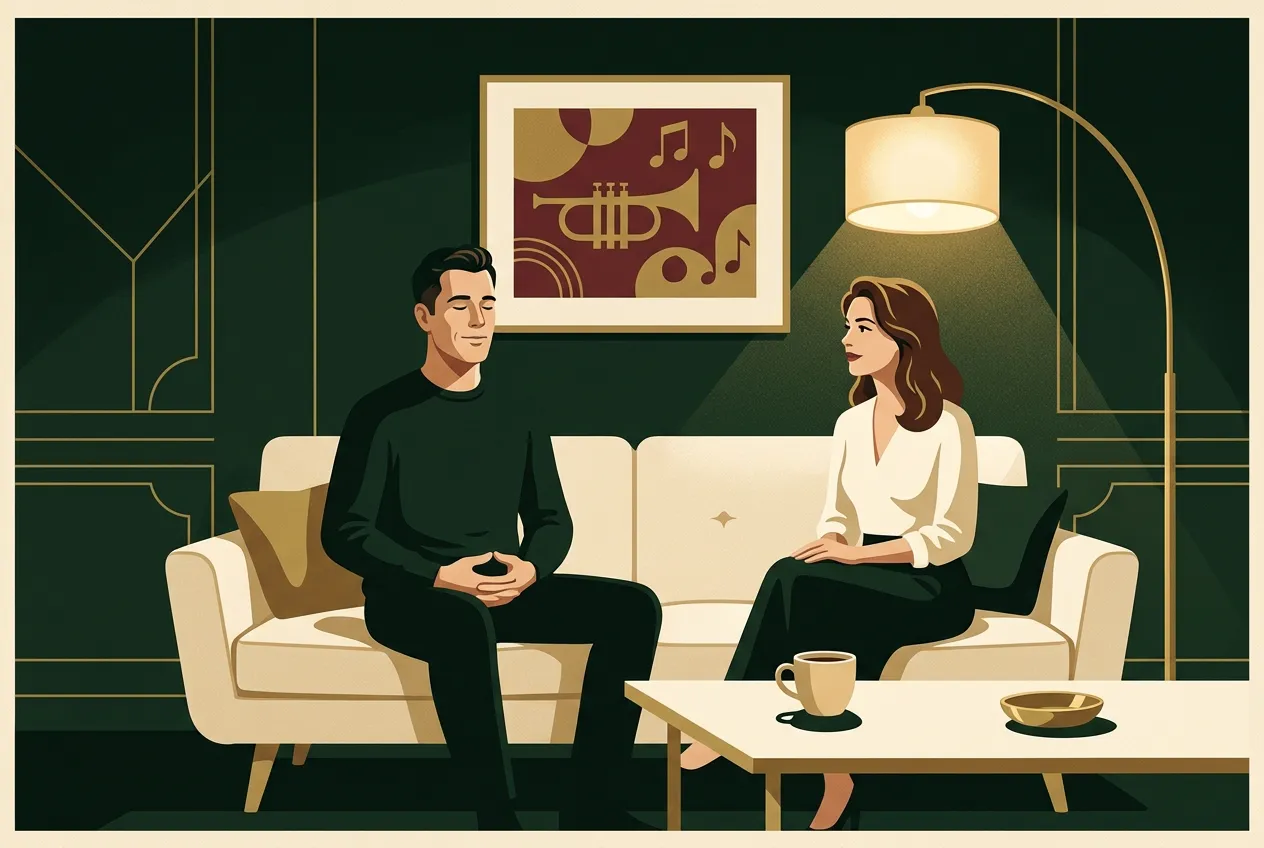
Nerves before a hard talk are human. Living inside a constant alarm is different, and it needs more than a blog post.
The old version of this page sold shortcuts. This one sticks to what the NHS and the US National Institute of Mental Health (NIMH) recommend, and it tells you when to call a professional. For general confidence work, how to be more confident is the place to start.
The short version
- Learn the line between normal worry and a disorder, because only one of them needs a clinician.
- Sleep, move, eat regularly and cut caffeine first: they lower the baseline you are fighting.
- Tell the other person plainly when anxiety spikes mid-talk, so you are not hiding it.
- Face avoided situations in small, planned steps; avoiding them tends to make anxiety worse.
- Call a professional when anxiety causes problems at work or in your relationships.
What is the difference between everyday anxiety and a disorder?
NIMH describes stress as a response to something outside you that goes away once the situation is resolved. Anxiety is a persistent feeling of apprehension or dread that does not go away on its own. Both are normal until they start running your week.
NIMH says a diagnosis of generalised anxiety disorder (GAD) needs worry that is hard to control on most days for at least six months. It also needs at least three symptoms, such as restlessness, muscle tension or sleep problems.
If that has been your last half-year, this page is only a first step. The next step is a GP or a mental health professional, not another article.
While you arrange that, or for milder spikes, the daily basics below are the place to start.
How do you deal with anxiety naturally? With daily habits, not supplements.
The NHS self-help advice for anxiety is plain, and it is what we follow: talk to someone you trust, exercise regularly, eat regular meals, and use calming breathing exercises. None of it is a cure, but each piece can help you relax and keep your energy steady.
NIMH says that reducing caffeine and getting enough sleep can reduce anxiety symptoms when paired with standard care. That makes them a support for treatment, not a replacement for it. The NHS also lists too much caffeine as something that can make anxiety worse.
- Protect a sleep window four nights this week.
- Do three workouts this week that get your heart rate up, such as a brisk walk, run or swim.
- Run the NHS breathing exercise once a day: breathe in gently, counting 1 to 5, then out gently, counting 1 to 5, for at least 5 minutes.
- Cut back on caffeine, especially after midday, and notice whether your drinks are making you jumpier.
- Tell one person you trust how you are actually doing.
- If worry will not quit, set a daily 10-minute worry time instead of carrying it all day.
“Not now: you get ten minutes at 6pm. I am finishing this first.”
The NHS calls this a daily worry time: a set slot to go through your concerns instead of carrying them all day.
Earlier in my career, anxiety wasn't an occasional nerve before a meeting — it ran most weeks. Teamwork, which should have been simple, took real effort I didn't talk about.
What helped wasn't one trick. It was treating confidence and rapport as skills to practice, the same habits this whole site is built on. It got better slowly, and I'm still working at it.
Next comes what to say when anxiety spikes in the middle of a conversation.
What are the best social anxiety tips for adults mid-conversation? Pause and say so.
You do not owe anyone a performance of being fine. A short, honest pause is better than fake calm or a sharp exit, because the other person is left guessing less.
If it feels sharper than nerves, with a racing heart and a tight chest, it may be a panic attack. The NHS says these usually last 5 to 20 minutes and are frightening but not dangerous. Decide your line before the spike hits, so you are not inventing one while your heart is racing.
You: I'm fine. Whatever. Let's just not talk about it.
You: I'm a little amped, so give me two minutes and I'll come back to this.
Them: Of course.
One more thing before the last section: facing what you avoid, in small steps.

Should you face a situation anxiety wants you to avoid? Yes, in small steps.
The NHS advises that you do not avoid situations that make you anxious, and that you slowly build up the time you spend in them to reduce anxiety over time. Avoidance feels like safety, but the NHS warns that it can make anxiety worse.
NIMH describes cognitive behavioral therapy (CBT) as the gold standard choice for psychotherapy for GAD. It helps people notice automatic thoughts that are inaccurate or harmful and then question them. You can borrow the idea on your own: when the panic voice says the worst will happen, ask whether the thought is accurate and what else could be true.
- Name the smallest version of the avoided thing you could do today.
- Do that version, and stay a little longer than is comfortable.
- If the panic voice argues back, ask whether the thought is accurate and what else could be true.
- Next week, pick a slightly bigger version of the same situation.
“This is uncomfortable, not dangerous. I'm staying five more minutes.”
The NHS says panic attacks usually pass within 5 to 20 minutes and that avoiding feared situations can keep anxiety going.
One last section: when to stop self-help and get a professional involved.
When must you get professional help? When anxiety causes problems in daily life.
NIMH says that if anxiety starts to cause problems at school, at work or with friends and family, it is time to seek professional help. The same goes if it blocks you from leaving the house or has not let up in six months despite real effort. A GP is a good first call.
If you are in immediate distress or thinking about hurting yourself, call or text 988 (the Suicide & Crisis Lifeline) or chat at 988lifeline.org. It is free and confidential, and people do not have to be suicidal to call. In a life-threatening emergency, call 911.
Questions you might have
Can't I just tough it out?
Gritting your teeth is fine for ordinary nerves. If anxiety has run most days for six months, though, NIMH says CBT is the gold standard treatment because it teaches you to question anxious thoughts, and willpower alone does not do that.
Is this the same as social awkwardness?
They overlap, but they are not the same thing. If you want to build social skills, start with how to stop being awkward. If fear is running your calendar, see a clinician.
Not medical advice
This guide is educational. It does not diagnose or treat anxiety disorders.
Exposure helps with everyday avoidance. If panic attacks, a specific phobia, or trauma are driving the avoidance, do graded exposure with a therapist's plan, not solo trial and error.
This site does not recommend supplements or products for anxiety.
Your move this week
- Book a check-in with a clinician if worry has owned most days for six months.
- Run the four basics for one week: sleep, movement, the breathing exercise, and one honest conversation.
- Save 988 in your phone, to call or text, before you need it.
Share this guide
Cite this page
Nicolas Tailor. "How to Deal With Everyday Anxiety (And When to Get Help)." SuaveWay, 5 October 2026, https://suaveway.com/blog/5-tips-on-how-to-deal-with-anxiety/.
Copy for Reddit
# How to Deal With Everyday Anxiety (And When to Get Help)

Everyday anxiety is a normal alarm that fades once the stress passes. Here is how to deal with anxiety day to day: sleep enough, move regularly, cut back on caffeine, talk to someone you trust, and face avoided situations in small steps. If worry runs most days for six months or more, or disrupts work or relationships, see a clinician.

The short version:

- Learn the line between normal worry and a disorder, because only one of them needs a clinician.
- Sleep, move, eat regularly and cut caffeine first: they lower the baseline you are fighting.
- Tell the other person plainly when anxiety spikes mid-talk, so you are not hiding it.
- Face avoided situations in small, planned steps; avoiding them tends to make anxiety worse.
- Call a professional when anxiety causes problems at work or in your relationships.

From SuaveWay: https://suaveway.com/blog/5-tips-on-how-to-deal-with-anxiety/