Contents
Learn alcohol in three lanes: fermented beer and wine, then distilled spirits. Know one US standard drink size for each lane, order what you actually like for the room you are in, and stock a home bar with versatile spirits first. Categories beat trivia. Preference beats performance.
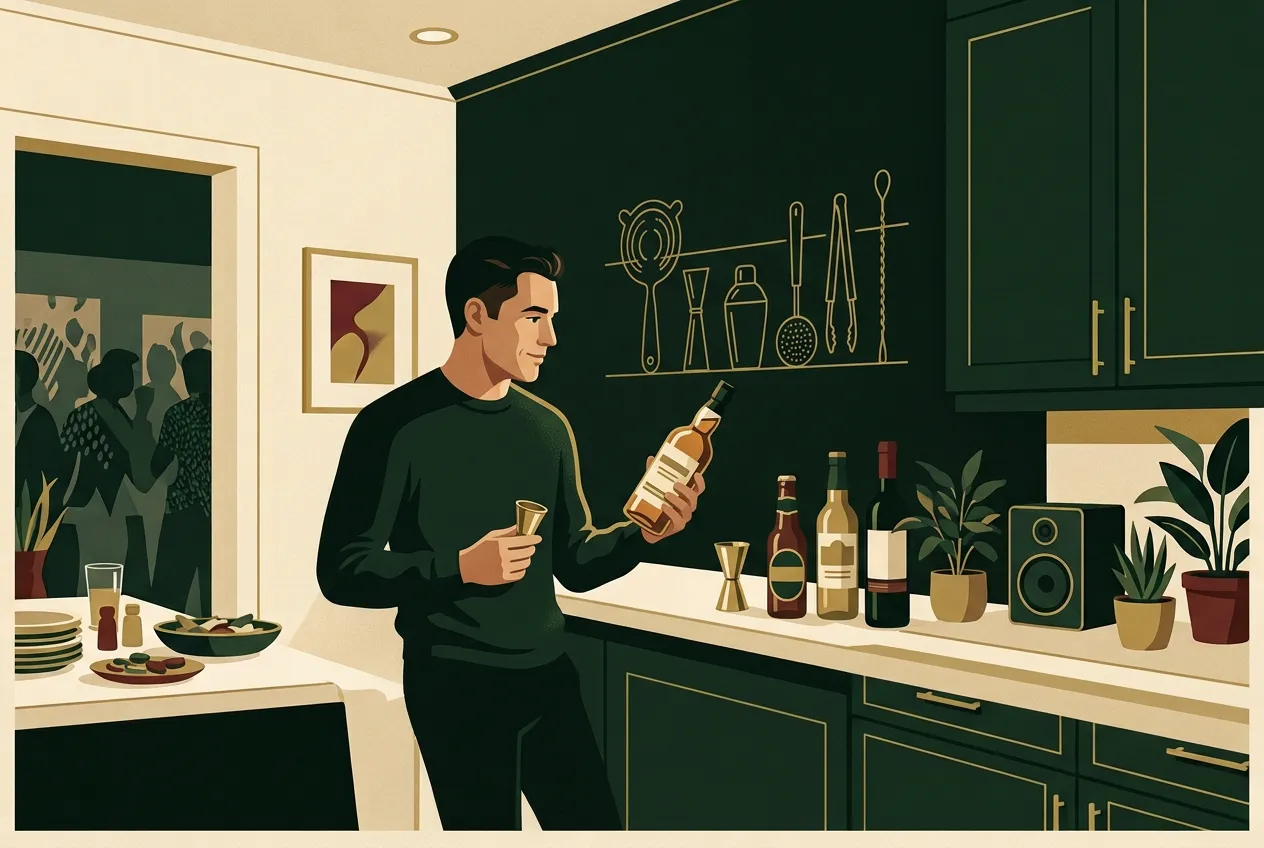
You do not need a sommelier vocabulary. You need to know what you are asking for — and whether the room can make it.
A dive bar and a hotel lobby both sell drinks. They do not both sell the same performance.
How we picked
Include a category only if a beginner will meet it on a menu or while stocking a first bar. Skip encyclopedia branches and joke entries.
Judge each item by: what it is made from, one tasting cue, one classic order, and how it fits a US standard drink when relevant.
Standard drinks (read this first)
In the United States, one standard drink is about 0.6 fl oz of pure alcohol — roughly 12 oz of 5% beer, 5 oz of 12% wine, or 1.5 oz of 40% spirits. A cocktail can be more than one standard drink. Measure when you host.
- How to start
- When you stock at home, use a jigger. See home bar essentials.
- Tip
- Knowing categories without knowing pour size is how parties get sloppy.
Beer — lager vs ale
Beer is fermented grain (often barley), water, yeast, and hops. Lagers tend to drink lighter and colder; ales usually carry more malt or hop character. "Malty" leans sweet or toasty; "hoppy" leans bitter. Craft styles explode from there — start by noticing which side you like.
- How to start
- Order the house lager once, then try one pale ale or stout so you know which lane is yours.
- Tip
- Pale American lagers are easy in volume; IPAs and stouts ask you to slow down. Match the pace to the night.
Wine — red, white, sparkling
Wine is fermented grapes (sometimes other fruit). Reds (cabernet, merlot, pinot noir, syrah/shiraz) usually serve cooler than room but warmer than fridge-cold. Whites (chardonnay, sauvignon blanc, riesling) usually chill. Rosé sits between. Sparkling wine is wine with bubbles; Champagne is a protected name for a region — plenty of good sparkling is just labeled sparkling or Prosecco.
- How to start
- Pick one red and one white you finish gladly. Learn those names before collecting adjectives.
- Tip
- Order a glass of something you have liked before. "Something dry and white" is a valid sentence.
Vodka
Under US labeling rules, vodka is a neutral spirit — meant to be largely without distinctive character, aroma, taste, or color (aside from the burn of alcohol). That is why it mixes with almost everything: tonic, citrus, tomato juice, coffee liqueur.
- How to start
- If you only buy one spirit for a first bar, vodka usually covers the most guests.
- Cost
- Mid-shelf 750 ml often about $15–25 USD (late 2026 US retail) — enough for mixing.
- Tip
- Classics: vodka tonic, vodka martini (vodka + dry vermouth), screwdriver, Bloody Mary, cosmo.
Gin
Gin is spirits flavored so the main character comes from juniper (and often other botanicals), bottled at least 40% ABV in the US standard. Think vodka's cousin with a pine-herbal edge. The classic martini is gin + dry vermouth.
- How to start
- Order a G&T once before you declare you "hate gin."
- Tip
- Gin and tonic or a gimlet (gin + lime) teach you whether you like botanicals. Do not assume every "martini" is vodka.
Whiskey (rye, bourbon, Scotch)
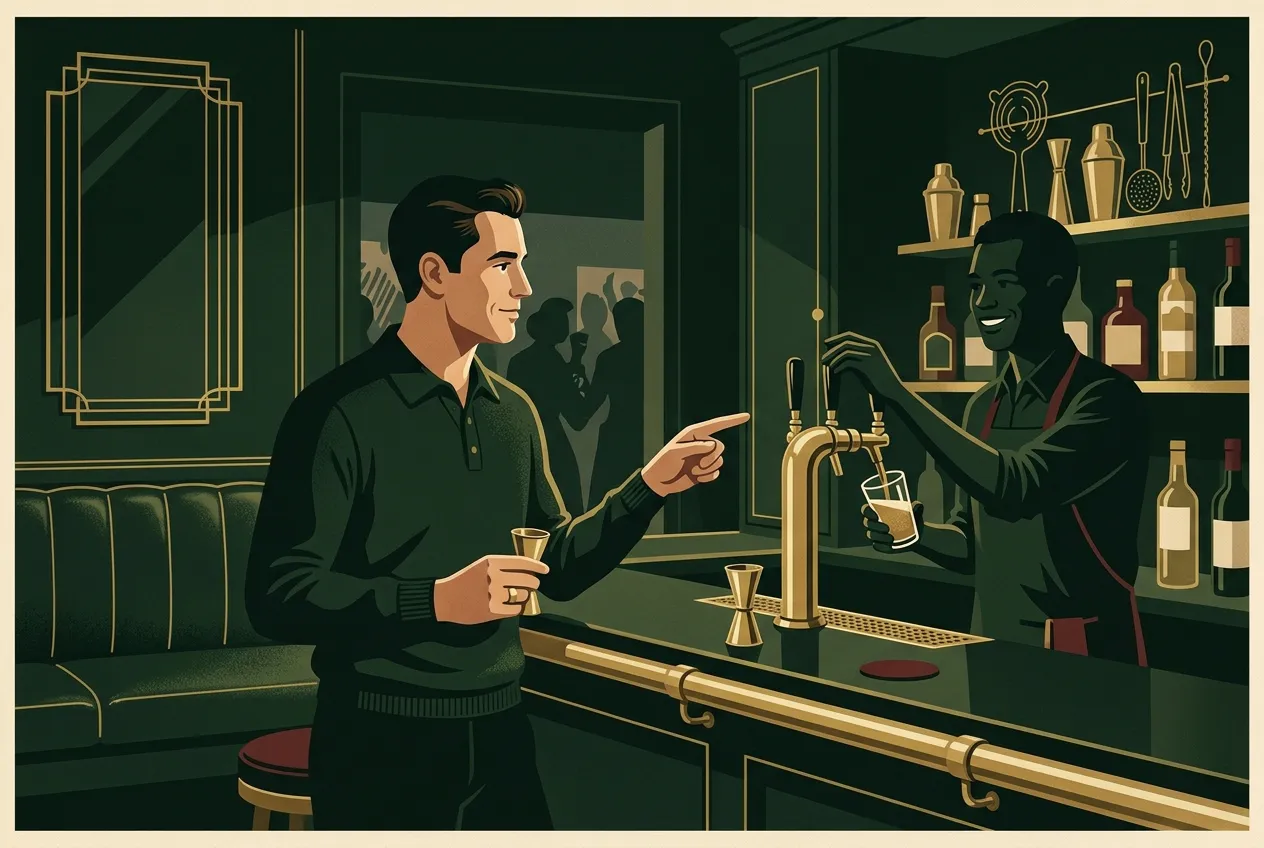
Whiskey is distilled from grain and usually oak-aged; US rules bottle it at least 40% ABV. Rye leans spicy; bourbon (corn-forward American whiskey) leans sweeter; Scotch is Scottish whisky — single malt from one distillery, blended for consistency. People have opinions. You are allowed to like what you like.
- How to start
- Taste a small neat pour at home before you order a $20 pour to impress strangers.
- Tip
- Classics: Old Fashioned, Manhattan, whiskey sour, mint julep. Use blended Scotch in cocktails if a single-malt fan is watching.
Rum
Rum is distilled from sugarcane juice, syrup, or molasses. Styles run light/white (mixers), gold, dark, and spiced. It is the backbone of daiquiris, mojitos, and rum-and-cola — and a strong second bottle after vodka on a budget bar.
- How to start
- Learn a three-ingredient daiquiri (rum, lime, simple syrup) before buying coconut cream.
- Tip
- White rum for citrus cocktails; darker or spiced for cola and sipping experiments.
Tequila (and why moderation matters)
Tequila is an agave spirit that must be made in Mexico under Mexican rules. It can be excellent sipping spirit or a messy shot culture — the bottle is not the problem; the pace is. Margaritas (tequila, lime, orange liqueur, salt rim) are the host-friendly path.
- How to start
- Buy tequila when you will make margaritas — not as day-one home-bar vanity.
- Tip
- If you are hosting and the room turns into shot Olympics, you can "run out" and pour water and food instead.
How to order without performing
Know what you enjoy. Match ambition to the room. Name the drink. Situational awareness beats cool words you cannot taste.
- How to start
- Practice the better line once this week in a real bar or restaurant.
- Tip
- Weak: "Something neat... vodka?" Better: "Vodka soda, tall, with lime" or "Gin martini, dry, olive."
Questions you might have
Do I need to like everything?
No. Categories help you navigate. Preference is the point. Snob vocabulary without a preference still reads as performance.
Isn't this just for alcoholics-in-training?
This is literacy for adults who drink sometimes. If drinking is a problem for you, skip the bar and get real help — this page is not that.
Your move this week
- Pick one beer lane, one wine, and one spirit you actually enjoy — write the three names in your phone.
- Order that spirit with a clear mixer or classic once this week.
- If you host, open home bar essentials and buy tools before the third bottle.
Share this guide
Cite this page
Nicolas Tailor. "Types of Alcohol for Beginners (What to Order and Stock)." SuaveWay, 4 October 2026, https://suaveway.com/blog/types-of-alcohol/.
Copy for Reddit
# Types of Alcohol for Beginners (What to Order and Stock)

Learn alcohol in three lanes: fermented beer and wine, then distilled spirits. Know one US standard drink size for each lane, order what you actually like for the room you are in, and stock a home bar with versatile spirits first. Categories beat trivia. Preference beats performance.

From SuaveWay: https://suaveway.com/blog/types-of-alcohol/