Contents
- ·How we picked
- 1Jigger + Boston shaker (buy as a kit if cheaper)
- 2Basic glasses (thrift first)
- 3Core spirit — vodka (or gin if you refuse vodka)
- 4Second spirit — rum (stretch goal)
- 5Optional — bourbon or whiskey
- 6Modifiers — dry vermouth, aromatic bitters, tonic
- 7Fresh prep — citrus, simple syrup, ice
- 8Host layer — self-serve basics + one offered specialty
- ·Questions you might have
- ·Your move this week
Stock a home bar for versatility, not vanity bottles. Buy measuring tools and a Boston shaker first, then one neutral spirit (usually vodka), rum if you can stretch, vermouth, bitters, tonic, citrus, and ice. Expect roughly $120–160 USD for a bare-bones kit in late 2026 US retail — then later parties cost mostly fresh mixers.
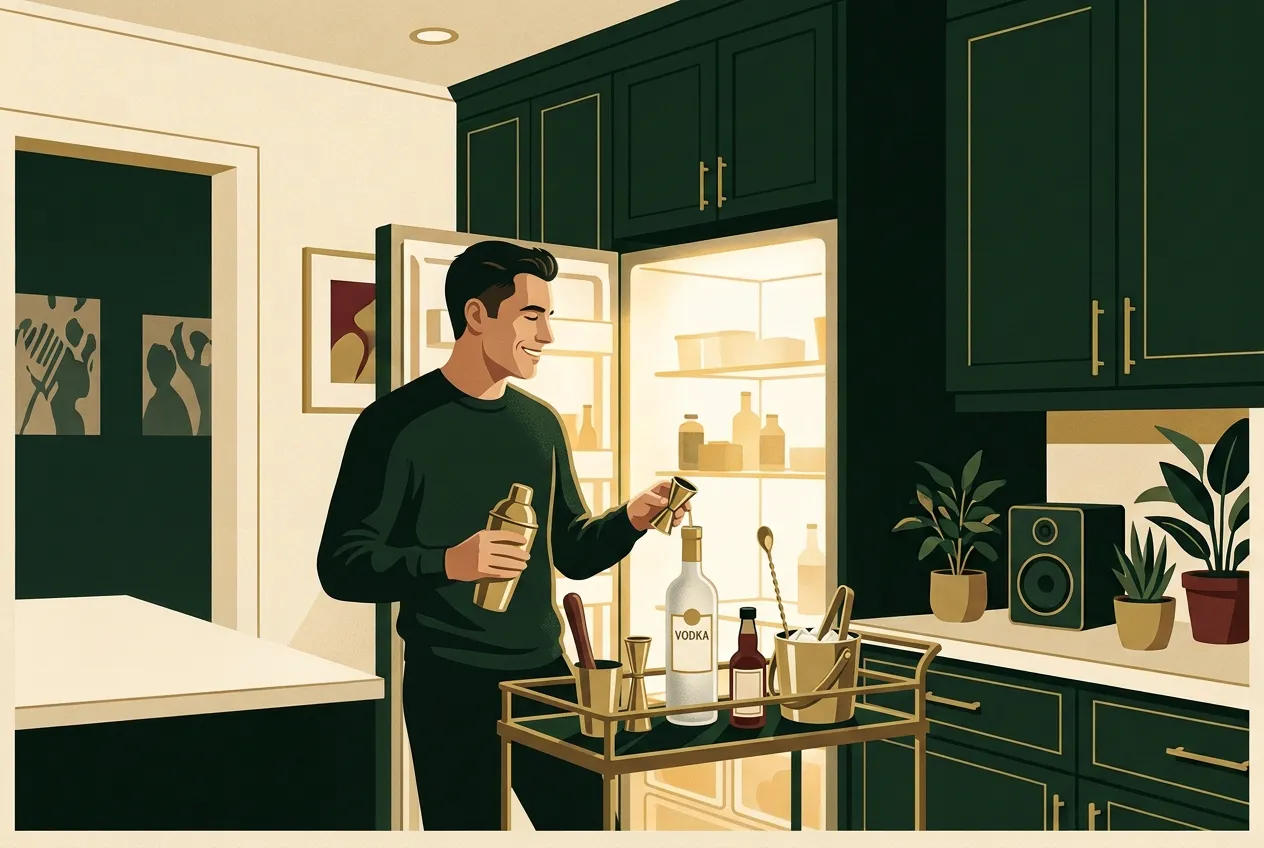
A home bar is not a museum of rare whiskey. It is a small kit that lets you host without defaulting to warm beer and mystery free-pours.
Prices move. Treat every dollar figure below as an October 2026 United States ballpark — your city and taxes will disagree, and that is fine.
How we picked
Items earn a slot only if they unlock several drinks, survive more than one party, or stop overserving. No single-use novelty liqueurs on day one.
Prefer mid-shelf spirits you will actually finish over trophy bottles you fear opening. Hardware before the second whiskey.
Jigger + Boston shaker (buy as a kit if cheaper)
Measuring is the difference between a cocktail and an accident. In the US, one standard drink of 40% spirits is about 1.5 fluid ounces — the large side of a common jigger. A Boston shaker (two nesting tins) shakes and strains without a three-piece cobbler that freezes shut.
- How to start
- Practice one shaken drink (daiquiri or vodka gimlet) before guests arrive so the seal-and-tap is muscle memory.
- Cost
- Kit about $20–40 on Amazon-style retail (Oct 2026). Standalone jigger often $6–12.
- Tip
- 1.5 oz in a highball with mixer is a sane host pour. Fancy recipes may call for 1 oz — read the line on the jigger.
Basic glasses (thrift first)
You need something to pour into — rocks or basic cocktail glasses, plus a few taller glasses for highballs. Four of each is enough for a small gathering. Brand-new sets can blow the budget; thrift and estate sales often win.
- Cost
- Aim $15–30 for a usable mix; new sets can run $25–50.
- Tip
- Chill a couple of glasses in the freezer an hour before service when a recipe wants it cold.
Core spirit — vodka (or gin if you refuse vodka)
Neutral spirits cover highballs, martinis, gimlets, and Collins-style drinks. Cheap bottom-shelf burn is miserable; mid-shelf vodka is usually enough for mixing. Gin fans can start there instead — just know vodka covers more hesitant guests.
- Cost
- 750 ml mid-shelf vodka often about $15–25 USD (Oct 2026 US retail).
- Tip
- Skip a dozen flavored bottles. One clean base beats a rainbow you never finish.
Second spirit — rum (stretch goal)
Rum unlocks daiquiris, mojitos, and rum-and-coke without inventing a tropical bar. After vodka, it is the best bang for cocktail variety on a budget.
- Cost
- Decent white or gold rum often about $12–20 for 750 ml.
- Tip
- If the budget only allows one bottle day one, take vodka and add rum before the next party.
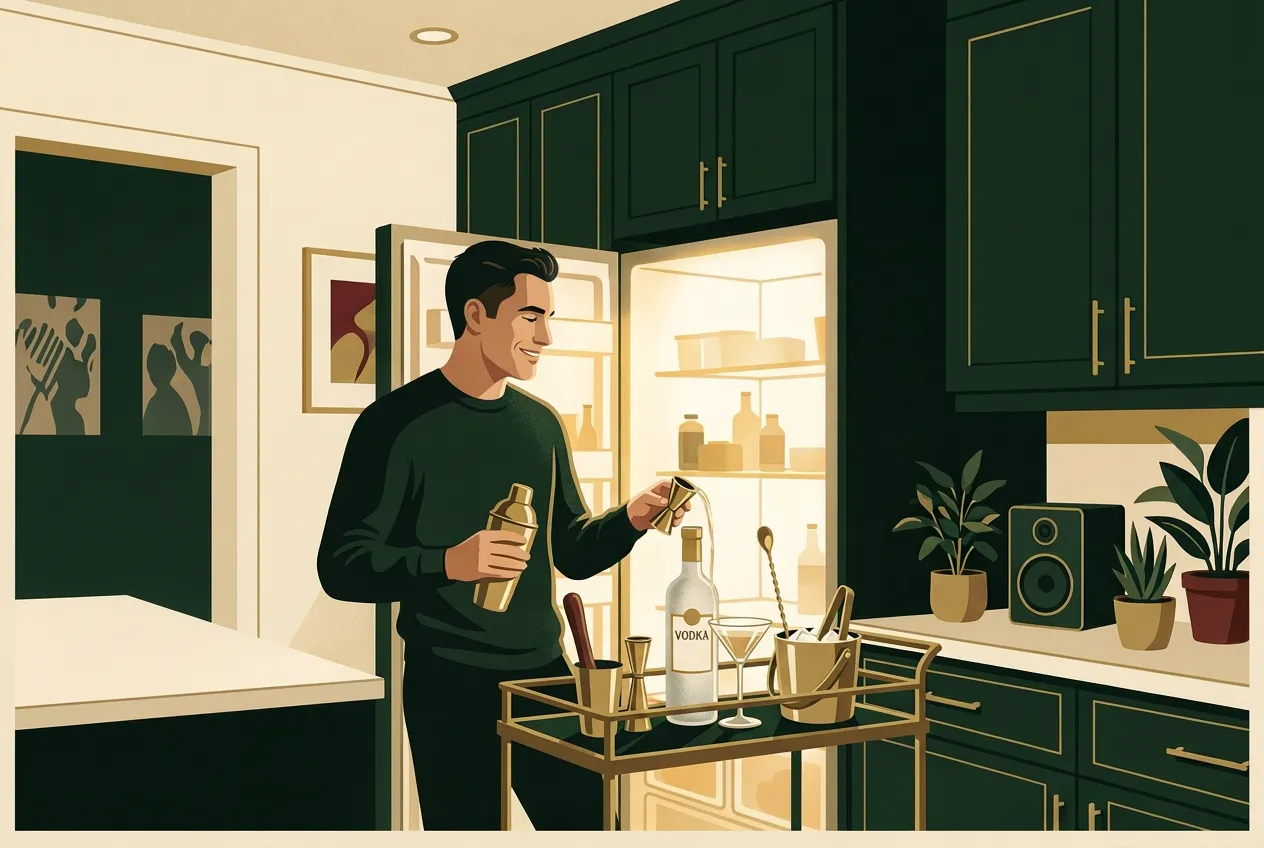
Optional — bourbon or whiskey
Old Fashioneds and Manhattans need whiskey. It is optional because it costs more and covers fewer hesitant guests than vodka or rum. Add it when those cocktails are actually on your menu.
- Cost
- Entry bourbon often about $20–35 for 750 ml.
- Tip
- Do not buy three whiskeys before you own bitters and a jigger.
Modifiers — dry vermouth, aromatic bitters, tonic
Vermouth makes a martini possible. Bitters turn sugar and spirit into an Old Fashioned once whiskey arrives. Fresh tonic beats flat two-liter leftovers. These small bottles do more work than another novelty spirit.
- Cost
- Dry vermouth roughly $6–14; aromatic bitters roughly $10–15; tonic a few dollars — buy cans if you hate waste.
- Tip
- Opened vermouth is wine — refrigerate and do not keep it forever. Prefer sweet vermouth instead if Manhattans are your only plan.
Fresh prep — citrus, simple syrup, ice
Limes, lemons, and homemade simple syrup (equal parts sugar and water, boiled and cooled) separate a grown-up drink from soda-and-booze. Ice is non-negotiable and always forgotten.
- How to start
- Simple syrup: simmer 1:1 sugar and water until dissolved, cool, bottle.
- Cost
- A few dollars for citrus and sugar; ice as needed the day of.
- Tip
- Squeeze citrus into a clean bottle hours ahead. Make syrup once; it keeps covered in the fridge.
Host layer — self-serve basics + one offered specialty
Put out spirits, mixers, and glasses so guests can build a simple highball without queuing. Offer one specialty you will shake. Beer covers the guest who only wants beer. You are hosting, not auditioning for Cocktail.
- How to start
- Before the first guest: music on, ice out, one drink already poured for yourself (or a non-alcoholic stand-in) so the room does not feel empty.
- Cost
- A six-pack or cheap case as needed; napkins and white towels a few dollars.
- Tip
- Say: "Can I get you something to drink? I'm making [cocktail] tonight." Specific offer beats a vague "want anything?"
Questions you might have
Can I still hit $100?
Sometimes, with thrift glassware and one spirit. In late 2026 US prices, a realistic bare-bones kit often lands closer to $120–160. Treat $100 as a 2010s myth unless your market is cheap.
Should I buy expensive whiskey first?
No. Tools, a mixable spirit, modifiers, and ice. Trophy bottles die unopened while guests drink warm soda.
Your move this week
- Buy jigger + shaker this week — practice one measured drink before anyone visits.
- Stock one spirit + vermouth or bitters + citrus + ice before the next gathering.
- Write your offer line on a sticky note by the counter.
Share this guide
Cite this page
Nicolas Tailor. "Stocking a Home Bar on a Budget." SuaveWay, 4 October 2026, https://suaveway.com/blog/home-bar-essentials/.
Copy for Reddit
# Stocking a Home Bar on a Budget

Stock a home bar for versatility, not vanity bottles. Buy measuring tools and a Boston shaker first, then one neutral spirit (usually vodka), rum if you can stretch, vermouth, bitters, tonic, citrus, and ice. Expect roughly $120–160 USD for a bare-bones kit in late 2026 US retail — then later parties cost mostly fresh mixers.

From SuaveWay: https://suaveway.com/blog/home-bar-essentials/