Contents
- ·The short version
- 1What does a charismatic personality mean?
- 2How do you know they really listen?
- 3Do they make the room breathe easier?
- 4Is their optimism contagious or performative?
- 5Can they empathize without folding?
- 6Are they sharp because they pay attention?
- 7Do they carry a direction people can follow?
- 8Does their confidence invite trust or fear?
- ·Questions you might have
- ·When not to
- ·Your move this week
A charismatic personality means people feel you mean well and you can deliver: you listen, ease a stiff hello, stay hopeful without lying, and answer what was actually said. You give the room a next step, and your confidence steadies others instead of shrinking them. Most of those signs of a charismatic person are habits you can practice.
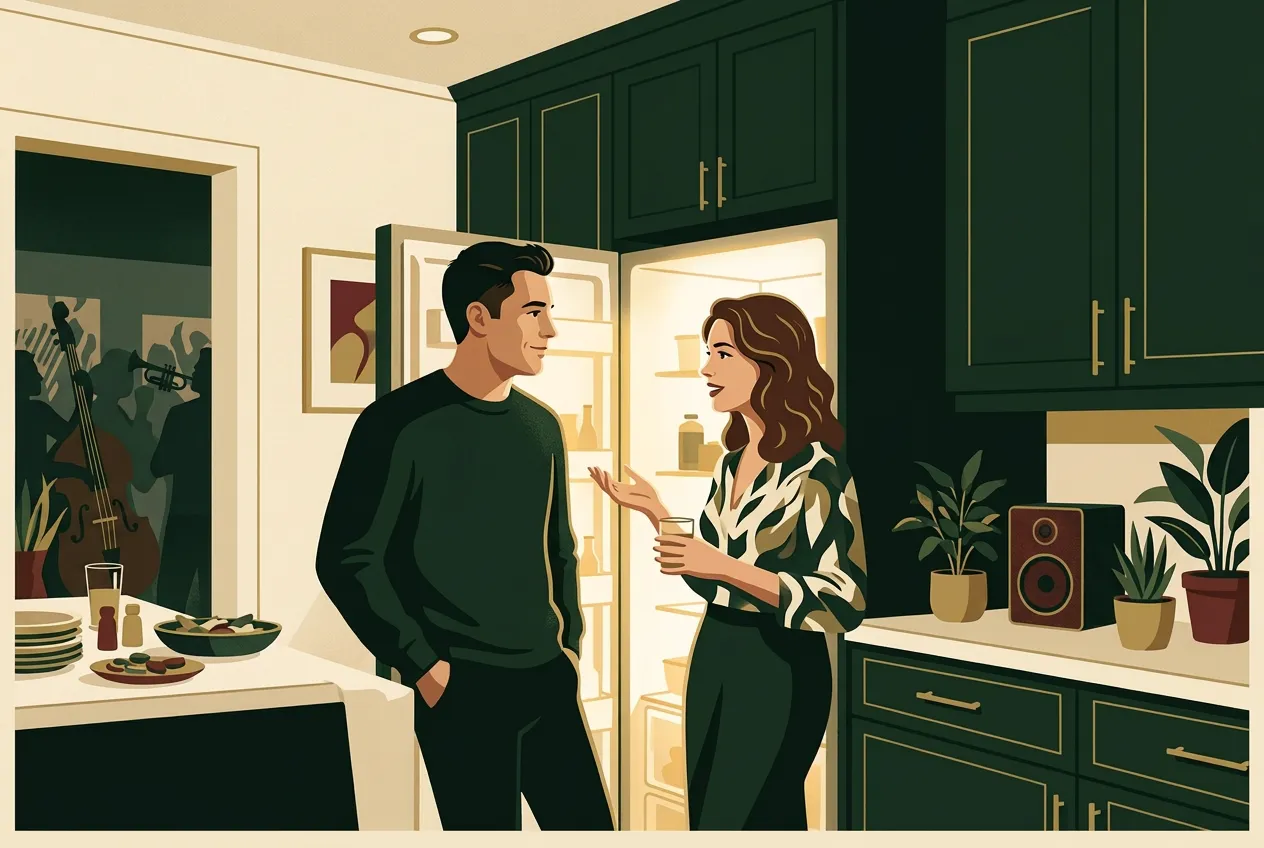
You can name a charismatic person in your life within three seconds. The harder part is saying what they actually do differently.
Volume is not the giveaway. Watch what they do after you finish speaking. Some charismatic people talk all night; some barely speak.
The characteristics of a charismatic person are the habits that leave people more at ease and clearer on the next step after half a minute with you.
The short version
- Practice being kind and capable in the same conversation. People feel safer and more impressed.
- Listen for what they need next, because nodding without a response is just performance.
- Smile at a stiff hello and intro two people who should meet: the room can talk for real.
- Name the obstacle, then offer a next step, so hope still sounds honest.
- Show you get how they feel, then ask if they want a rant or ideas, so you do not get steered.
- Answer from what they just said, so wit reads as attention, not a show.
- State the next move in one sentence, because people follow a plan they can see.
- Use confidence to steady the room. Others should feel safer, not smaller.
What does a charismatic personality mean?
It is people deciding you mean well, and that you can deliver. Those two judgments are warmth and competence. A fair guess is that people who seem both kind and capable draw help and company, while people who seem neither get left out.
What makes someone charismatic in everyday life is the same split: making people comfortable, and guiding them. Charismatic personality traits worth copying are those two habits working together, not a mysterious gift. How to be suave is the daily practice of that balance.
People probably form a first read on whether you mean well very quickly, so let your warmth show early: a real smile and your name offered first.
The fastest warmth signal is often how they listen.
How do you know they really listen?
You know they really listen when they respond to what you actually need, not when they nod. Charismatic people are not always the loudest in the circle. Often they tracked the thread, asked the follow-up, and made the speaker feel heard.
In interviews with bank staff, good listening behavior alone often was not what made someone feel heard. They felt heard when the listener met the real need, sometimes in the talk, sometimes by following through after. Likability and small talk reward the same habit: attention beats a performance. The old Carnegie point still holds: be more interested than interesting.
Keep the phone away for the first stretch of a real talk. One study found a visible phone made strangers feel less close; a later try could not reproduce it. Treat it as a nudge: you cannot answer a joke you half-heard.
You: (nods while scrolling) Yeah, totally. Same.
Them: So we might move cities for her job.
You: Damn — are you leaning yes?
Them: Honestly it's the schools. We keep going in circles.
You: Yeah. What's the hang-up there?
Listening is how you catch what they said. The next sign is whether the room feels less stiff after you arrive.
Do they make the room breathe easier?
Yes: they make a stiff room easier to talk in. Tonight, smile at a stiff hello. That is one of the signs of a charismatic person worth copying, and you do not need a speech. A light joke when the line stalls, or introducing two people who should know each other, says you are safe to be around.
Open posture, steady eye contact, and a voice that lands instead of trailing off should all help. That is our own reasoning, not a study result. Going to a bar alone trains the same skill: read the room before you try to change it.
- Enter with your shoulders down and your phone away for the first ten minutes.
- Match the room's energy before you try to change it.
- Offer one bridge — a name, a topic, a warm intro — when you see two people stuck.
“Hey — I'm Alex. How do you know the host?”
Check whether the room is easier to talk in after you arrive. Next, see whether you can name a step the group can take.
Is their optimism contagious or performative?
Honest hope is the one people can follow. Name the obstacle, then offer a next step, so they can tell it from fake cheer. Charismatic optimism is not denial. It is betting people can handle the next step, and that the effort is worth it.
A fair guess is that cheerful leaders seem more charismatic, and that their mood rubs off on the people around them. At a dinner party, our own read is that fake cheer is easy to spot, while hope with a named obstacle and a next step still sounds true.
Next comes empathy: staying kind while you point to a next step.

Can they empathize without folding?
Yes: they show they feel the weight, then they still think clearly. Empathy is not agreeing with everything. Skip it and you look cold. Only empathize and you look easy to steer.
Feeling for someone with no honest follow-up is comfortable, not useful. Name what they are carrying, then ask what kind of help they want.
You: Wow, that's awful, I can't even picture it — anyway, want another drink?
Them: My boss moved the deadline again. I'm fried.
You: Ugh. Want to rant, or you want ideas?
Once they feel understood, a sharp line from what they just said can land. Sarcasm without that usually does not.
Are they sharp because they pay attention?
Yes: the line that lands is usually built on what someone else just said. Often sharp-witted charisma is timing plus recall, not a stand-up set. It can look like humor or a calm one-liner that lowers the heat.
In a group, mark someone else's win before you tease. Skip sarcasm until you have done that; if they go quiet, you were the problem.
“Fair. You got me.”
A joke can lift the room. A next step is what people actually follow.
Do they carry a direction people can follow?
Yes: they make the next step obvious in one sentence. That is the guiding half of everyday charisma, not the same thing as being easy to like.
Our own reasoning is that people relax when someone competent says where the night or the meeting is going. In a group, say that next step out loud so people know where to stand.
- State the next step in one sentence before you add context.
- Ask who owns what by when — even informally.
- Close loops: recap decisions so nobody wonders if they were heard.
Direction only earns trust when it comes with decency, which is the risk in the last section.
Does their confidence invite trust or fear?
It invites trust when others feel steadier, not smaller. Confidence is belief in your judgment, shown through action. Charismatic confidence makes the room easier to be in.
The dangerous version is all competence and no warmth. It seems the same charm can sometimes travel with narcissism or a bossy, run-over-people style. The skill and the character are two separate things, and only one of them should earn your trust.
The version you can trust, in our view, is consistency: how you speak, how you treat staff and strangers, and whether the warmth is still there when nobody important is watching. Practice the pieces in small talk and ordinary rooms before you trust a flashy read.
Questions you might have
Isn't charisma just manipulation?
It can be. Warmth and competence are tools. Manipulation hides intent; a charismatic person you can trust shows the same warmth when the room is empty.
Do you have to be an extrovert?
No. It seems plenty of magnetic people speak less and listen more. Charisma is the effect you have on others, not how charged you feel after a party.
If building a circle at all feels like the harder problem, start with how to make friends as an adult man. The same warmth and attention apply, just at a slower pace.
Do the signs of a charismatic woman look different?
No. She is judged on the same two things as a man: does she mean well, and can she deliver. The signs of a charismatic woman are still listening, easing a stiff moment, and naming a next step.
Style and volume change; the signs of a charismatic woman do not. That is our stance, not a lab finding about every room.
Can you learn a charismatic personality, or is it a birthright?
Most of the signs are habits: listen, ease a stiff hello, say the next step, keep your word. You will not fake a whole persona overnight. You can practice one of those moves this week.
When charisma goes wrong
Warmth and force without decent aims is how people get used. Admire the skills; judge the aims.
If someone makes you feel small, rushed, or obligated while calling it charm, that is not a charismatic personality. That is pressure.
Your move this week
- This week, run one conversation phone-down and ask two follow-ups from what they said.
- Notice one person who eases a room; write down three specific behaviors they used.
- Pick one of the charismatic personality traits — listening, ease, or direction — and practice it in a low-stakes room.
Share this guide
Cite this page
Nicolas Tailor. "8 Signs of a Charismatic Person (What They Mean)." SuaveWay, 5 October 2026, https://suaveway.com/blog/signs-of-a-charismatic-personality/.
Copy for Reddit
# 8 Signs of a Charismatic Person (What They Mean)

A charismatic personality means people feel you mean well and you can deliver: you listen, ease a stiff hello, stay hopeful without lying, and answer what was actually said. You give the room a next step, and your confidence steadies others instead of shrinking them. Most of those signs of a charismatic person are habits you can practice.

The short version:

- Practice being kind and capable in the same conversation. People feel safer and more impressed.
- Listen for what they need next, because nodding without a response is just performance.
- Smile at a stiff hello and intro two people who should meet: the room can talk for real.
- Name the obstacle, then offer a next step, so hope still sounds honest.
- Show you get how they feel, then ask if they want a rant or ideas, so you do not get steered.
- Answer from what they just said, so wit reads as attention, not a show.
- State the next move in one sentence, because people follow a plan they can see.
- Use confidence to steady the room. Others should feel safer, not smaller.

From SuaveWay: https://suaveway.com/blog/signs-of-a-charismatic-personality/